 Purple Orange AI

Featured systemPurple Orange AgentAI for small teamsPreview
What it proves
Recurring work stays connected to its sources, schedule, and review context so a person can inspect the next step.
Agentic product studio
We design and engineer AI products that coordinate real work across control surfaces, connected tools, and human approval gates.

Recurring work stays connected to its sources, schedule, and review context so a person can inspect the next step.
Explore project proof“Build the system. Show the proof.”
Web app Slack Telegram
Delivery boundaryHuman approval on every run
Build stack: Claude Code, Fable 5.1, OpenAI, GitHub, Obsidian, n8n, Next.js, React, TypeScript, Python, Node.js, Tailwind CSS.
 Unilever

 Western Union
$2,500. Live in 7 days. It drafts. You approve. Larger sprints after that.
Need a longer build? Other packages
7 days · fixed scope
$2,500
One recurring workflow in the tools you already use. The agent drafts. It does not send, post, or write back until you approve. Live in your workspace in 7 days.
Best for: owner-led teams that want the work done without giving an agent the keys.
$1,250 to start. $1,250 when the first live draft is waiting for you.
See the offerOngoing · after handoff
$500 per month
Monitoring, prompt updates when your process changes, and one small change a month. For an agent already running in your tools.
Best for: teams that want the agent kept sharp without hiring for it.
Starts when the 14-day fix window ends. Cancel any time.
See how it starts2 Weeks
$12,000
One to two production workflows built inside your actual tools: access setup, implementation, testing, approval controls, documentation, and handoff.
Best for: A clear manual workflow with real business value and enough focus to ship in two weeks.
Fixed fee. Scope confirmed on the intake call.
Book the intake callEvery build starts with one 30-minute call. We map the workflow, the tools, the approvals, and the failure paths. If one agent can carry it, we scope the $2,500 install on the call. If it cannot, we say so and you owe nothing.
Workflow intake · 30 minutes
Bring the workflow eating your week, blocking a launch, or keeping a pilot out of production. We pressure-test it, score the implementation risk, and give you the clearest next move.
If we do not see a workflow worth automating, we will tell you before you spend a dollar.
A repeatable sequence still happening manually. It is work an owner, operator, founder, support lead, sales team, or engineering org does over and over. If it has clear inputs, decisions, and outputs, it can usually be systemized.
If your workflow is not on this list, still book the audit. The point is to find the highest-leverage starting point before you commit to implementation.
Pick the workflow eating your week.
30 minutes. No charge. You keep the map either way.
Every engagement follows the same five beats. No mystery, no surprises on the invoice.
Thirty minutes on a call, then a written map of the workflow: what is worth automating first, which tools it touches, who approves, and where it can fail. You keep it whether or not we build.
Before code, a plan you can read: objective, success criteria, non-goals, the approved design, and the quality gate the build has to pass. This is the actual outline of a spec from this site's own repository.
Working software in your tools, shown live every week. Below: the current Purple Orange Agent workspace, our own product, with a competitor-monitor mission, its schedule, and inspectable controls.

Before launch, an adversarial review with a binding verdict. Every finding names a file and a line. Below: four lines from the September 8 review of our own production hotfix.
VERDICT: SHIP-WITH-FIXES
[severity high] [CONFIRMED] automationSummaryPolicy.ts:52-62
[severity medium] [CONFIRMED] libraryBaseline.ts:506-514
[severity medium] [PLAUSIBLE] accountLibrary.ts:1084
Your team owns it: the pause switch, how to change the prompt, who to ping, and the checks that run before every change. Below: the verify loop this website runs before every commit.
python3 -m unittest discover -s .github/tests -p "test_*.py"
python3 scripts/render_featured_projects.py --check
python3 scripts/stamp_asset_versions.py --check
python3 scripts/generate_mobile_media.py --check
Purple Orange Agent is built by one founder with an agent swarm. Every deploy passes reviewers on a different model. The stricter verdict binds.
On August 23 the reviewer refused the repair set too. The hotfix that followed is what runs today.
Each found defects the other never saw. The stricter verdict bound. Repairs ship only on two greens.
Your agent gets the smaller version of the same gate: a person you name approves before anything goes out.
Read the refusal logWe pick the sharpest tool for the job. Then we write the code, wire the pipes, and hand it off so your team can extend it.
OAuth into your tools, every action logged, a person approves before anything sends.
MCP means Claude Code and Codex read from, write to, and orchestrate across the tools you use every day: Notion, Slack, Gmail, Linear, Stripe, Shopify, and 1,000+ more. Anything internal, we build a custom MCP server for.
Don't see yours? Scope a custom MCP server →
We wire your agents directly into Slack, Telegram, Discord, WhatsApp, and iMessage. Your team types a sentence; the agent runs the workflow, updates the CRM, drafts the doc, or ships the post, then reports back in thread.
 Telegram
 Discord
 WhatsApp
A Purple Orange Agent demonstration: request, sources, reviewable card, your approval, delivery. Every run logged with cost evidence.
Claude Code and Codex are both free to try. Docs are good. Here's why teams still call us.
2-3 months of trial and error
Your team can figure it out, but two months of tool hopping, brittle demos, and abandoned automations costs more than a focused sprint. We already know which patterns survive real work.
3-6 months to fill + 2-3 months to ramp
Senior AI engineers with real production chops are rare, expensive, and not looking. You would wait months to hire, then months more to ramp. We ship working workflows in weeks and hand off to your existing team.
Strategy decks that never ship
Most AI consultancies sell recommendations and leave you to implement. We write real code, deploy to production, and do a full handoff with documentation your engineers can actually use.
Real owned products and operating systems, with truthful status, current media, and deeper proof where it is publishable.
An AI operator for recurring founder and team workflows, connecting working context, scheduled missions, review, and source trails in one workspace.

A scientific evidence lab building systems that connect claims to their sources, assumptions, and review. PsychDoc.AI is its first application.

A research evidence interface for psychedelic medicine, connecting scientific claims to sources, methodological context, and uncertainty for human review.
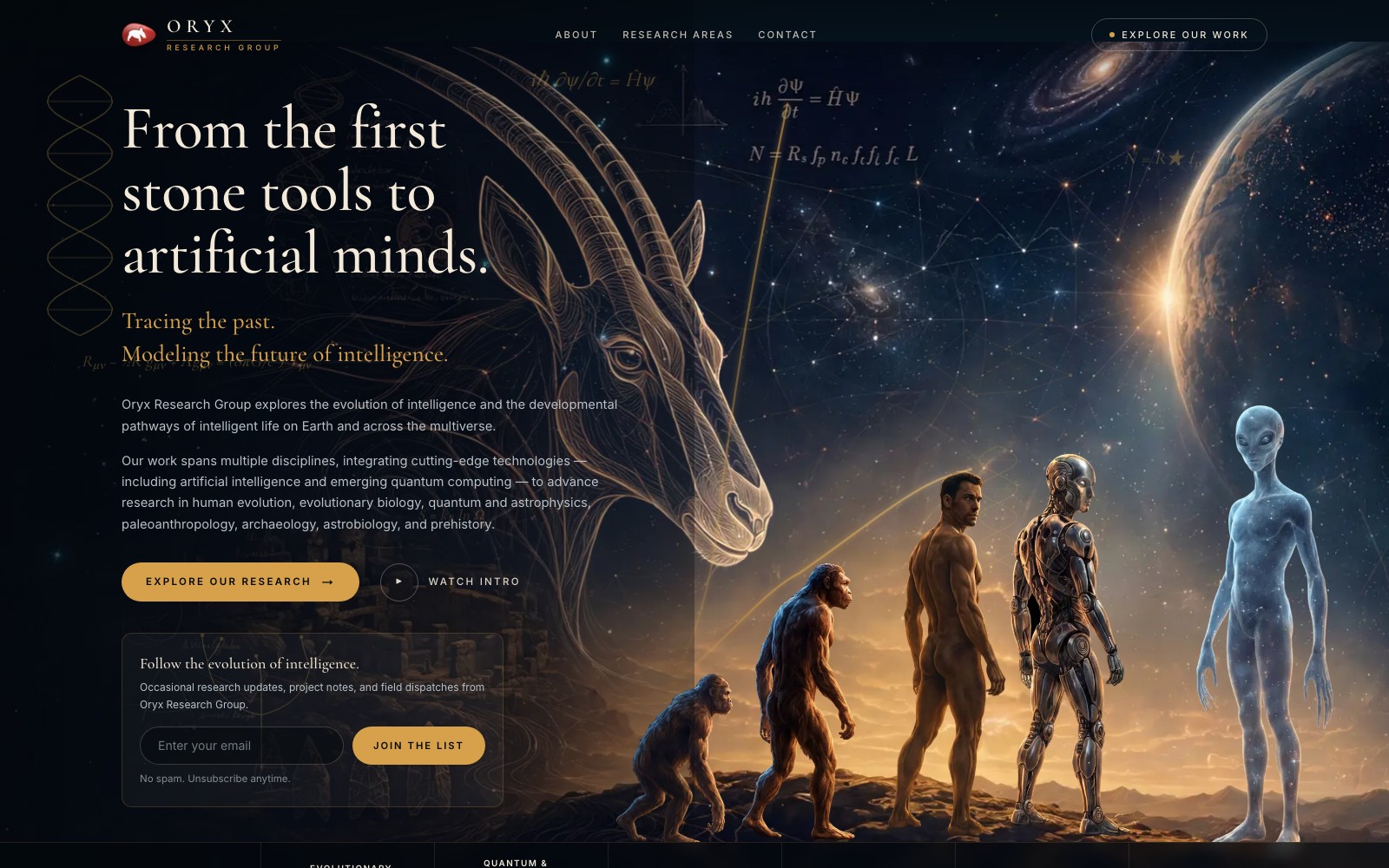
A public research platform exploring how intelligence emerges and evolves, connecting human origins, evolutionary biology, astrophysics and artificial intelligence.
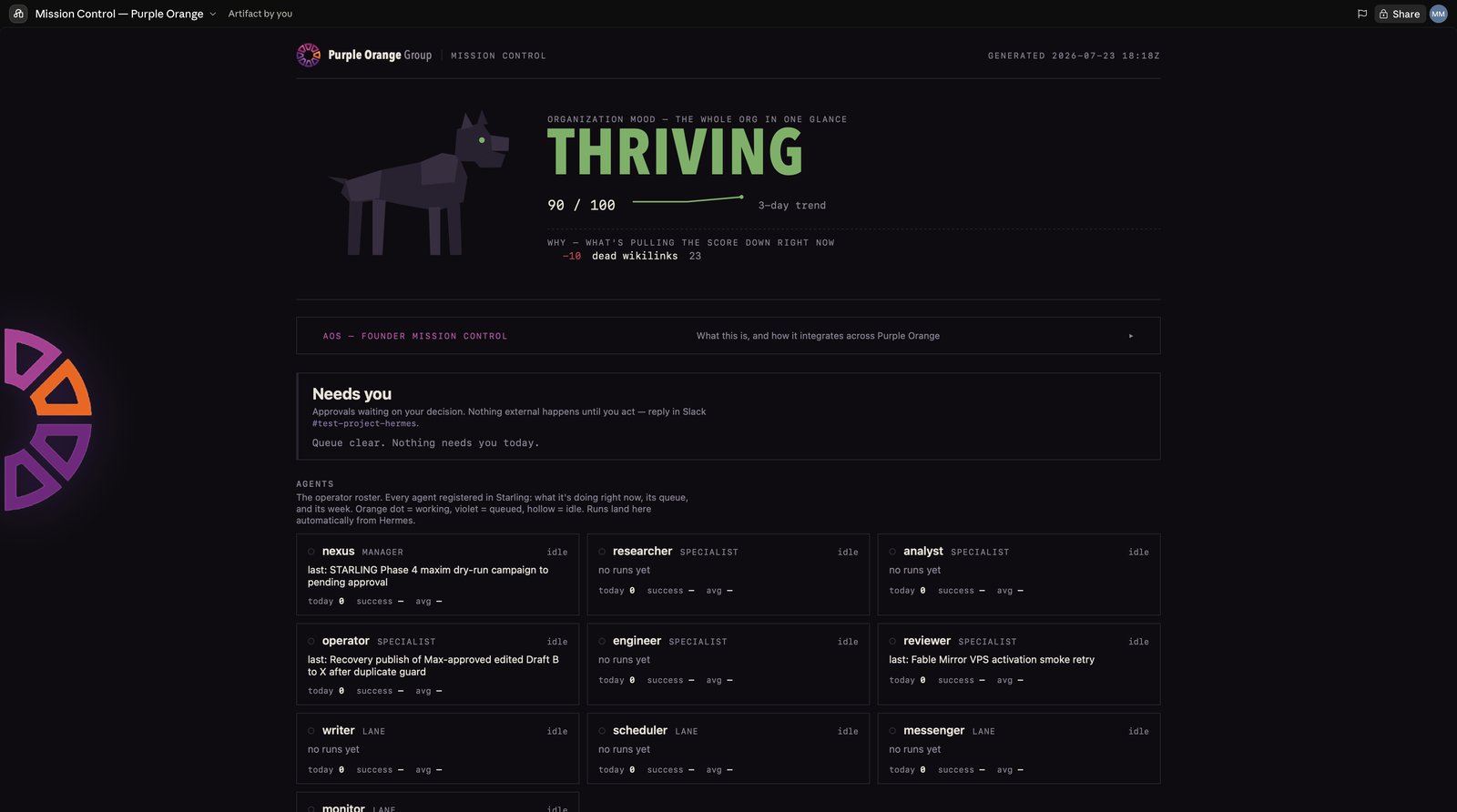
A read-mostly cockpit for an entire agentic organization: a telemetry-driven organization mood score, a unified Needs-You approval queue, and a live roster covering every agent's current work, queue, and week, assembled automatically from run evidence.
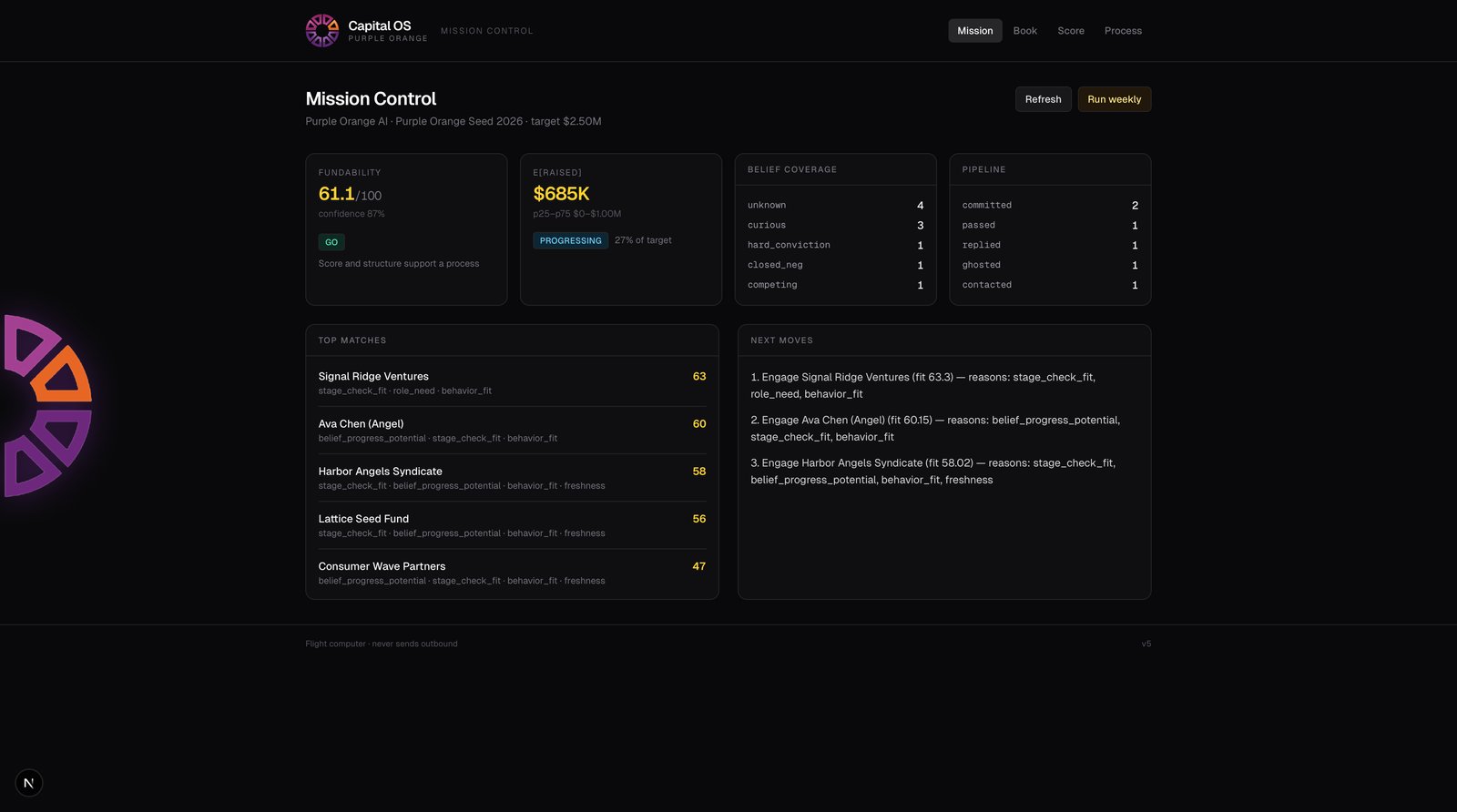
A raise-process operating system that scores fundability, models the expected raise with confidence bands, tracks per-investor belief coverage and pipeline state, and ranks the next investor moves with explainable reasons. It drafts, but never sends outbound.
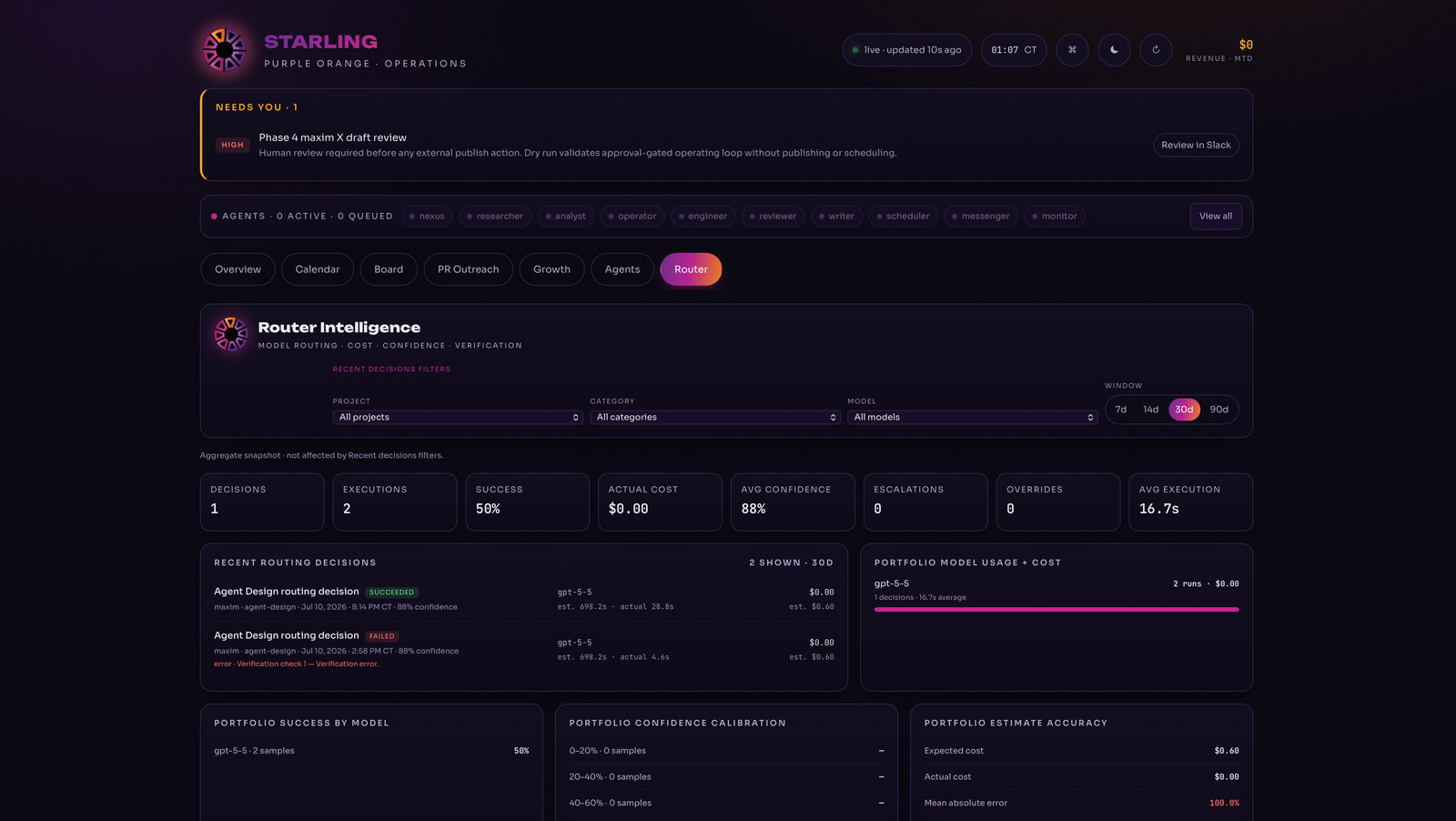
A non-executing control plane that selects models, verification, escalation, and approval contracts for Hermes, then records confidence, cost, execution, and outcomes.
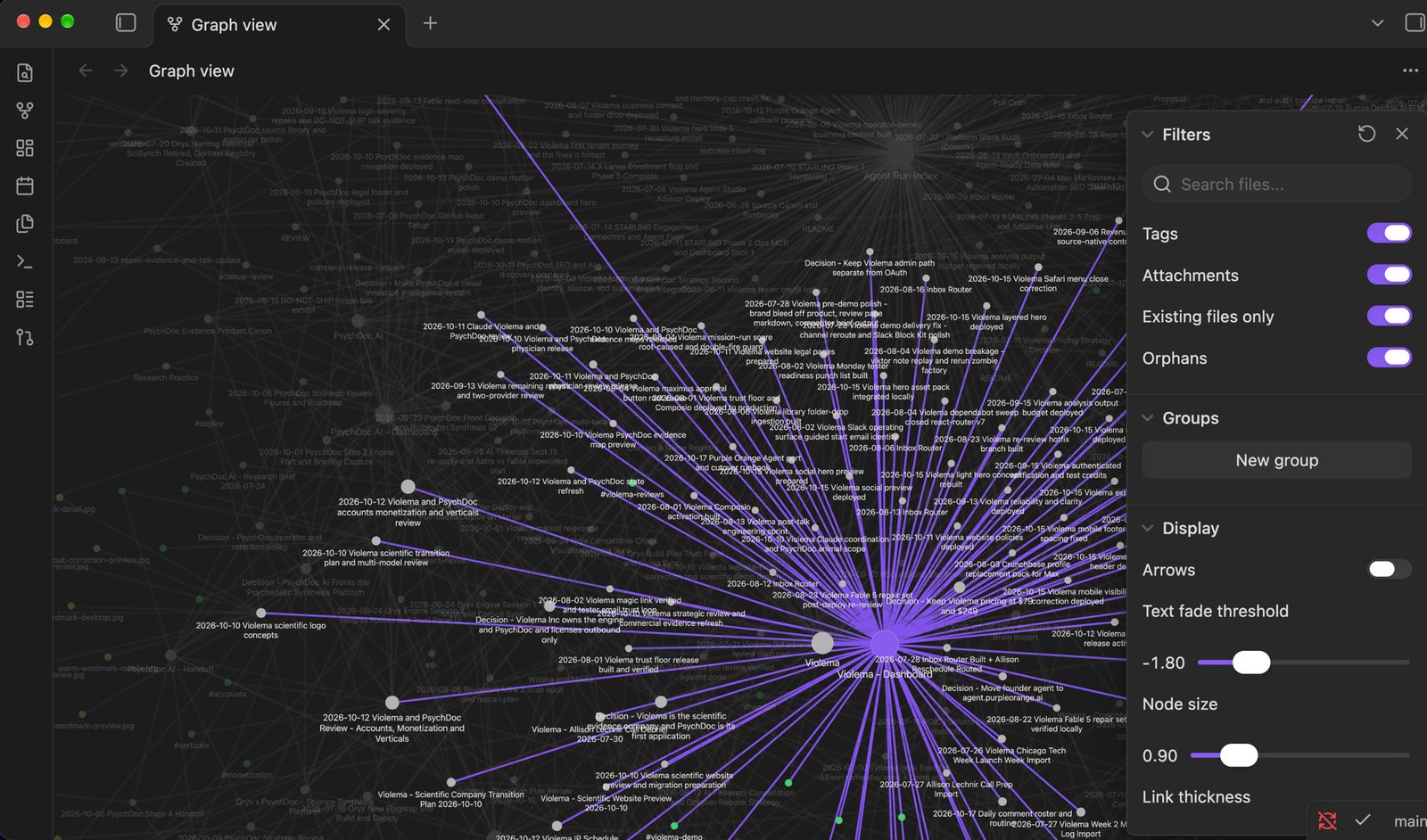
An Obsidian knowledge graph built by Graphify: documents, decisions, agent runs, and entities are extracted into one linked, queryable vault that gives every agent and platform the same durable context.
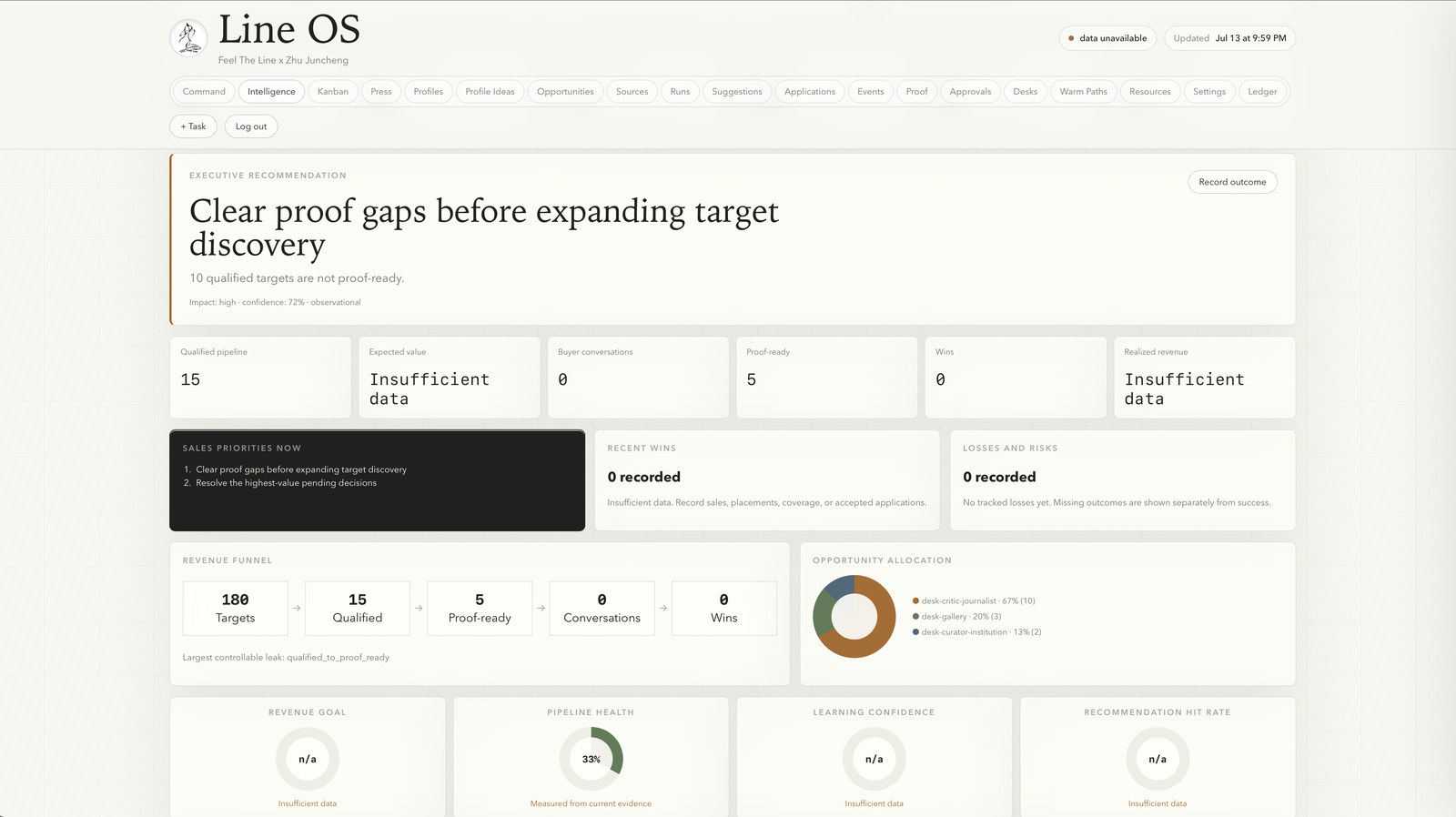
A governed sales, partnership, press, and collector operating system that turns production-ledger evidence into qualified-revenue recommendations, proof readiness, pipeline health, and approval-gated action.
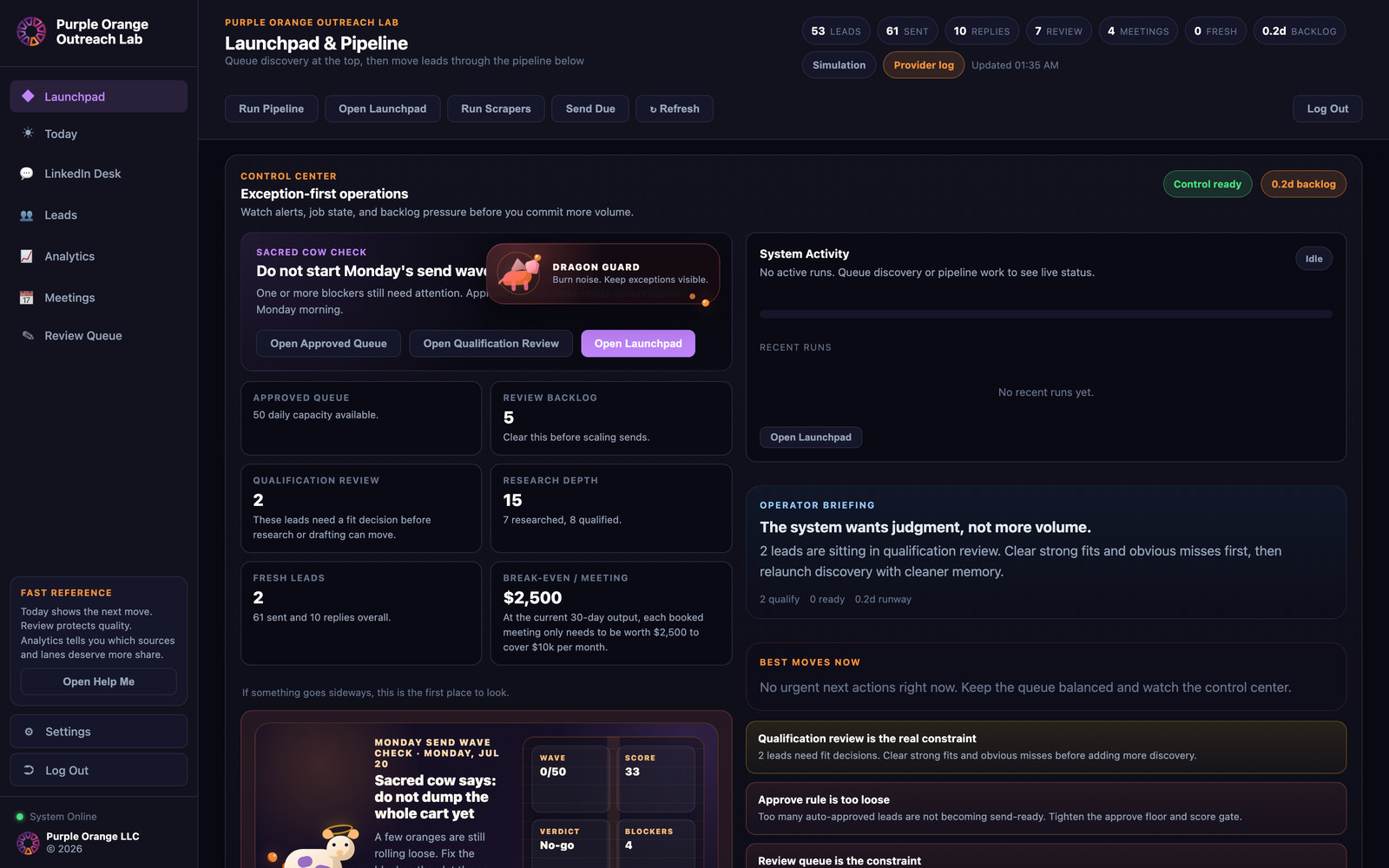
A configurable outbound operating system for lean teams, joining campaign setup, source packs, research, qualification, review queues, and send controls.
Test one inbound call workflow: answer from your approved information, capture the request, and hand it to the right person.
Explore a voice agent pilotCollect the caller’s need and the details your team needs to respond.
Use approved answers. Confirm appointments only when your connected system verifies them.
Route exceptions and callback requests through a tested fallback.
A separately scoped pilot. Call volume, integrations, provider costs, and handoff tests determine the quote.

Purple Orange AI is a production AI engineering practice based in Chicago. We build and operate the AI systems that owner-led businesses, funded startups, and mid-market teams actually ship: Claude Code, Codex, Cursor, MCP servers, agentic workflows, Docker orchestration, CI/CD pipelines, and full-stack deployments.
Founded by Max Markovtsev, who ships AI infrastructure daily, from custom MCP server integrations to full operator deployments on production VPS. Before building AI systems, Max spent 15+ years shipping high-stakes projects at Leo Burnett, BBDO, and JWT for P&G, Unilever, and Wrigley. That means we know how to communicate with executives, hit deadlines, and deliver under pressure.
Three installs a month. One operator, Max.
We build and deploy production AI systems for owner-led businesses, funded startups, and mid-market teams. That includes environment setup, MCP server integrations, agent workflows, CI/CD pipelines, and complete team handoff, using whichever tool fits best: Claude Code, Codex, Cursor, or a mix. Engineering practice, not a deck-selling consultancy.
Both, plus Cursor. We pick the tool by the problem: Claude Code for complex agent orchestration and MCP-heavy work, Codex when a team is already deep in the OpenAI ecosystem, Cursor for developer-facing IDE flows. One operator across all three.
We assess workflow readiness, integration surface, ownership, risk, and controls. You walk away with a specific automation candidate, tool/integration map, timeline, and honest scope estimate. You keep it even if you don’t hire us. If it fits, we scope the $2,500 install on the call.
Hiring takes 3-6 months. We deploy in 1-6 weeks. You get production infrastructure, documentation, and handoff without adding someone you need to manage. Our practice has already solved the problems a new hire would be discovering.
Yes. Many of the best first workflows live inside owner-operated businesses: real estate, dental, HVAC, CPA, law, auto dealers, light manufacturing, agencies, and service businesses. Same senior engineer, same quality bar, scoped to fit.
Yes. Typically through Production AI Infrastructure engagements (see the full packages page). We navigate security review, SSO, audit requirements, and cross-team governance so a stalled pilot becomes real production infrastructure.
No. It removes the worst hours of their day so they can do real work.
Default setup runs in your tools and your accounts. Data stays in your environment. We document the data flow before we build, you sign off, then we build.
Yes. It is the intake call for a paid install, not a sales meeting. We keep it short and direct because it is the first 30 minutes of the work.
Book the 30-minute intake. We will map the workflow, tools, risk, and approval gates, then give you a concrete path to production. You keep the plan even if we are not the team to build it.
A ranked workflow recommendation, integration map, complexity rating, timeline, and an honest read on whether the work is worth doing now. If it fits, we scope the $2,500 install on the call.
 Claude Code
 Fable 5.1
 OpenAI
 GitHub
 Obsidian
 n8n
n8n Next.js
 React
React TypeScript
 Python
 Node.js
 Tailwind CSS


